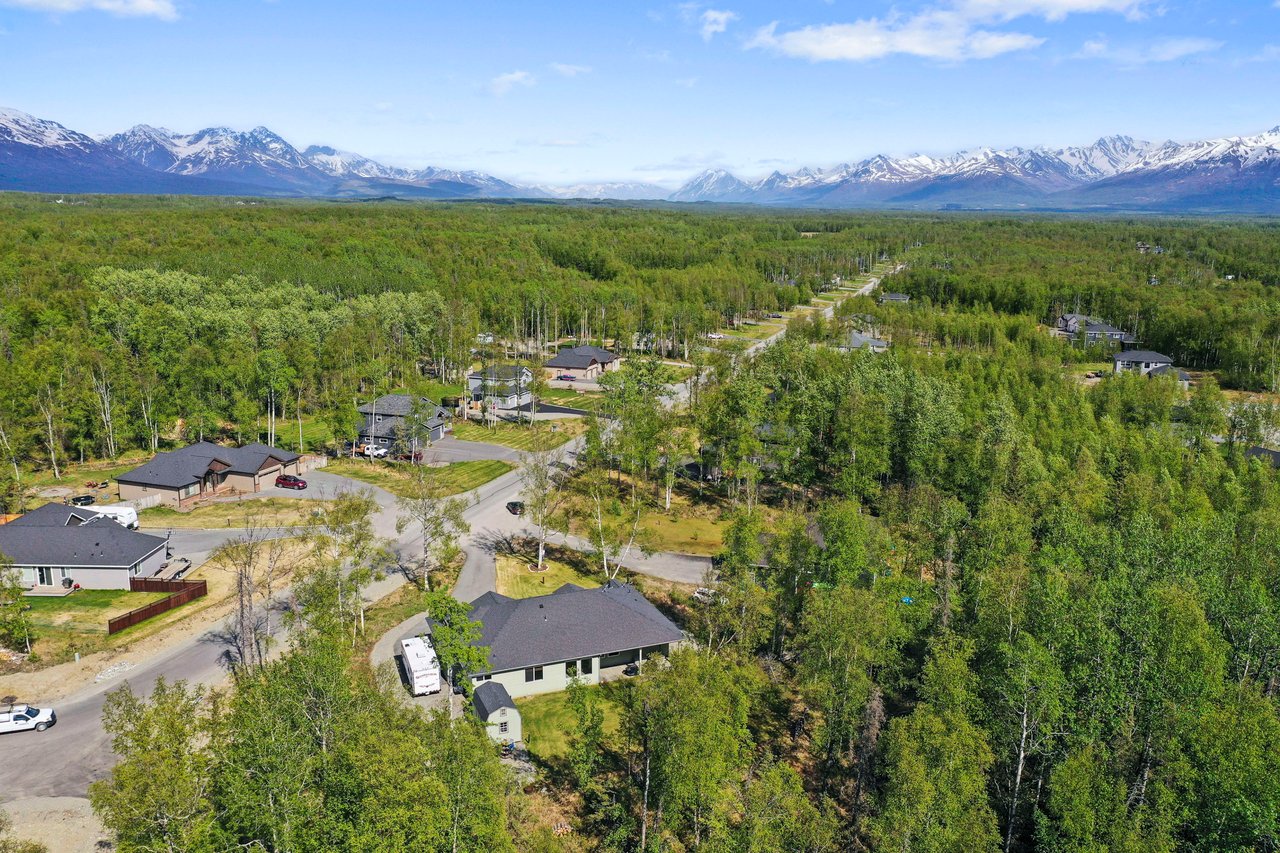
Eagle River sits in a glacially carved valley at the base of the Chugach Mountains, roughly 20 miles northeast of downtown Anchorage via the Glenn Highway. Technically within the Municipality of Anchorage, it operates as a distinct community with its own school cluster, commercial corridor, and identity — close enough to the city for work and services, far enough to feel like somewhere else entirely. View current Eagle River homes for sale, or read on for how the valley's five sub-areas differ.
The appeal is elemental: more space. In Eagle River, half-acre lots are the entry point, not the exception. Custom homes on Hiland Road command one to five-plus acres with panoramic mountain views. The Eagle River itself — a glacier-fed, salmon-bearing river — runs through the valley, flanked by cottonwoods that turn gold every September in one of Alaska's most underrated fall color displays. For families, outdoor enthusiasts, and remote workers who want proximity to Anchorage without trading their quality of life, Eagle River delivers a combination that is increasingly rare: room to breathe, trails out the back door, and a community that actually knows its neighbors' names.
Eagle River's history predates Anchorage itself. The Crow Pass Trail — one of Alaska's most celebrated backcountry routes — was originally part of the Iditarod Trail, used by Gold Rush prospectors traveling from Seward to Nome beginning in the early 1900s. That trail descends from Crow Pass through the Eagle River Valley, placing this community at the intersection of Alaska's frontier heritage and its modern outdoor recreation culture.
The Eklutna people, an Athabascan group whose village of Eklutna lies just north of Eagle River, have called this valley home for thousands of years. The historic Eklutna Village and its distinctive painted spirit houses — a fusion of Russian Orthodox and Athabascan traditions — remain one of the most visited cultural sites in the Anchorage area.
Modern Eagle River developed primarily in the 1970s and 1980s as Anchorage's oil boom drove suburban expansion north along the Glenn Highway. By the 1990s and 2000s, the valley had matured into one of the region's most desirable family communities — with established neighborhoods, improving infrastructure, and a commercial corridor that reduced dependence on downtown Anchorage for daily needs.
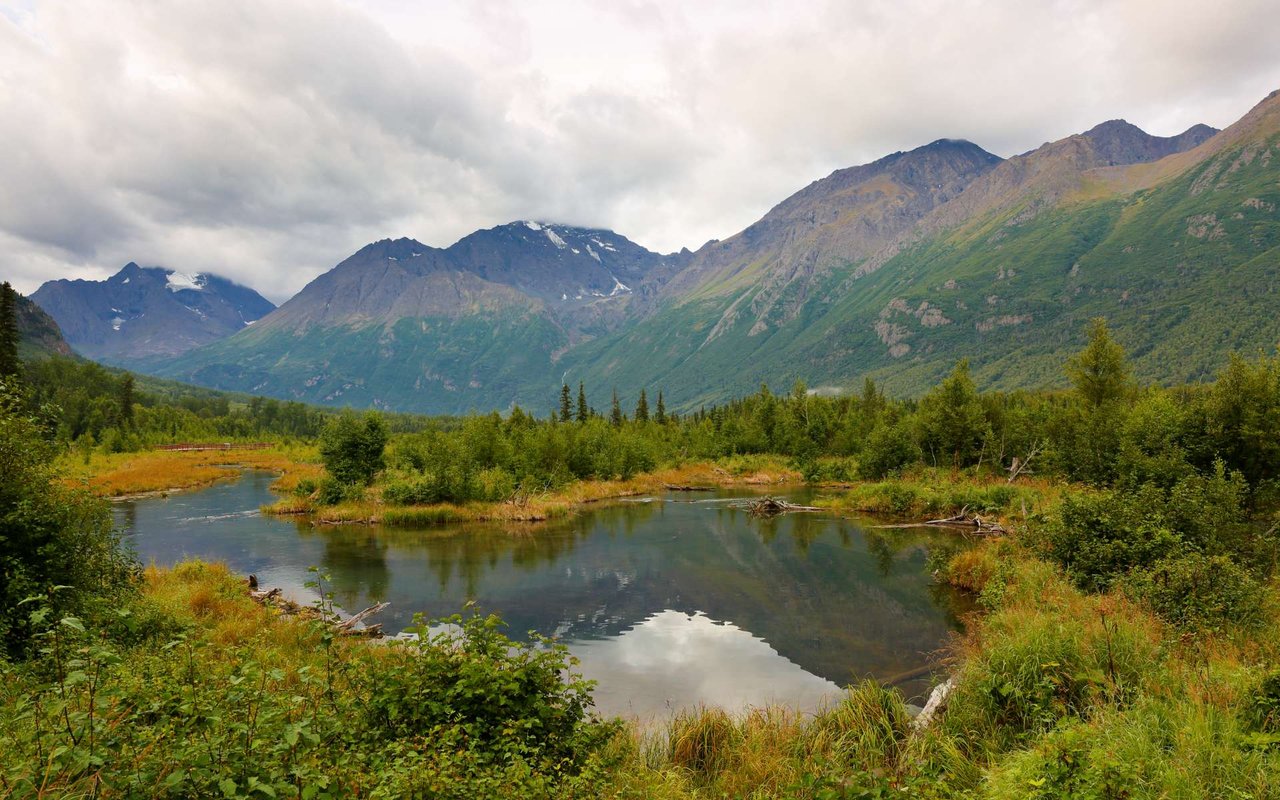
The Eagle River Nature Center sits at the end of Eagle River Road, set against the towering peaks of the Chugach Mountains at roughly 800 feet elevation. For Eagle River residents, it is a 10–15 minute drive to one of the finest trail systems accessible from any American city.
In summer, the Eagle River offers class II–IV whitewater kayaking and pack-rafting, world-class salmon fishing (king, silver, and pink), and wildlife viewing — Dall sheep, moose, black and brown bears. In winter, the same terrain becomes exceptional aurora borealis viewing far from Anchorage's light pollution, with snowshoeing and ski touring from the trailhead.
Eagle River is not a single neighborhood. Each sub-community carries its own character, price range, and buyer profile.
Sub-Area | Price Range | Lot Size | Property Type |
|---|---|---|---|
Peters Creek/Chugiak | $350K – $550K | 0.5 – 1.5 acres | Older SFH, ranches |
Eagle River Valley | $400K – $650K | 0.5 – 1 acre | Established SFH, townhomes |
South Fork | $500K – $750K | 0.5 – 2 acres | 1980s–90s SFH, cul-de-sacs |
Eagle Pointe | $550K – $800K | 0.75 – 2 acres | Newer construction SFH |
Hiland Road | $700K – $1.2M+ | 1 – 5+ acres | Custom homes, acreage estates |
Eagle River is served by the Anchorage School District's Chugiak-Eagle River cluster — known for strong community involvement, competitive athletics, and the close-knit school culture that is harder to maintain in larger urban schools. Smaller class sizes, teachers who know students by name, and outdoor education programming that leverages Chugach State Park proximity are consistent selling points for families.
Eagle River attracts buyers who have made a conscious decision about how they want to live in Alaska. Families who want their children to grow up with trails, rivers, mountains, and wildlife as their backyard. Outdoor enthusiasts — hikers, backcountry skiers, hunters, and anglers — for whom Hiland Road's proximity to the Nature Center trailhead is a primary purchase criterion. Remote and hybrid workers who chose the mountain valley lifestyle over urban density. Military families at Joint Base Elmendorf-Richardson (approximately 15 miles south) who value the school system and outdoor access. Anchorage downsizers seeking a single-level home with a real yard and a garage for recreational gear.
Eagle River is Anchorage's answer to the question: where do you live if you love Alaska, have kids, and work in the city? The Bear Paw Festival each July — one of Anchorage's oldest summer celebrations — is a reliable indicator of community character. It draws genuine participation because Eagle River residents are genuinely invested in their community in a way that's difficult to find inside the Anchorage Bowl proper.
What is the average home price in Eagle River, Alaska?
The median single-family home price in Eagle River is approximately $485,000. Entry-level homes start around $400,000, while custom acreage homes on Hiland Road can exceed $1.2M. Lot sizes range from 0.5 to 5+ acres depending on the sub-area, making Eagle River one of the best value propositions in the greater Anchorage market for buyers who need space.
How far is Eagle River from downtown Anchorage?
Eagle River is approximately 20 miles northeast of downtown Anchorage via the Glenn Highway. The commute typically takes 20–30 minutes in normal conditions. Hybrid and remote workers who are in Anchorage a few days a week consistently cite this commute as a non-issue relative to the lifestyle gain.
What is the Eagle River Nature Center?
The Eagle River Nature Center is a nonprofit visitor center at the end of Eagle River Road, providing access to world-class trails including the 26-mile Crow Pass Trail — a historic Gold Rush Iditarod route — along with day hikes and backcountry ski access. For Eagle River residents it is a 10–15 minute drive that unlocks 495,000 acres of Chugach State Park wilderness.
What are the best sub-areas to buy in Eagle River?
Hiland Road is the most prestigious — custom homes on large lots with panoramic Chugach views, $700K–$1.2M+. Eagle Pointe offers newer construction at $550K–$800K. South Fork is family-oriented with established neighborhoods at $500K–$750K. Peters Creek provides affordable acreage entry at $350K–$550K. The Eagle River Valley corridor offers the broadest range of inventory at $400K–$650K.
What schools serve Eagle River, Alaska?
Eagle River is served by the Anchorage School District's Chugiak-Eagle River cluster: Eagle River Elementary, Fire Lake Elementary, Chugiak Elementary at the elementary level; Mirror Lake Middle School and Chugiak Middle School; and Eagle River High School and Chugiak High School. The cluster is known for smaller class sizes than Anchorage urban schools and strong outdoor education programming.
Is Eagle River a good place to raise a family?
It is one of the best in Alaska. Eagle River's combination of acreage lots, top-rated neighborhood schools, low traffic density, abundant outdoor recreation, and tight-knit community makes it the preferred choice for families prioritizing space and quality of life. Children grow up with trails, rivers, mountains, and wildlife as their backyard — which is, for most Alaska families, exactly the point of living here.
Ready to Explore Eagle River?
Acreage properties and custom homes require a different approach than urban real estate. The Prince Group knows every sub-area, every view corridor, and which listings are coming before they hit the MLS.
Call Sean Williams directly: (907) 312-8141
Current Eagle River listings from the MLS, covering all five sub-areas of the valley — from in-town convenience to Peters Creek acreage.
Eagle River draws steady demand from buyers priced out of Anchorage's view corridors but unwilling to give up mountains and schools — and that demand rewards sellers who position correctly. The Prince Group markets Eagle River homes to both Anchorage and Valley buyer pools. Start below or call (907) 312-8141.
Sellers preparing to list can also review the Certified Pre-Owned standard — a pre-listing inspection approach that settles repair questions before a buyer's inspector sets the agenda.
Get three independent automated valuations of your home in about two clicks. The Prince Group's instant valuation tool pulls from multiple data sources to return a real-time price corridor — useful whether you're planning ahead for a sale, considering a refinance, or simply curious about your current equity.
For a precise expert review, request a complimentary Strategic Pricing and Marketing Analysis through the same tool. Sean Williams will personally evaluate your home against current and recent comparable sales in your neighborhood and recommend a specific pricing and launch strategy.
Or call Sean directly at 907.312.8141.