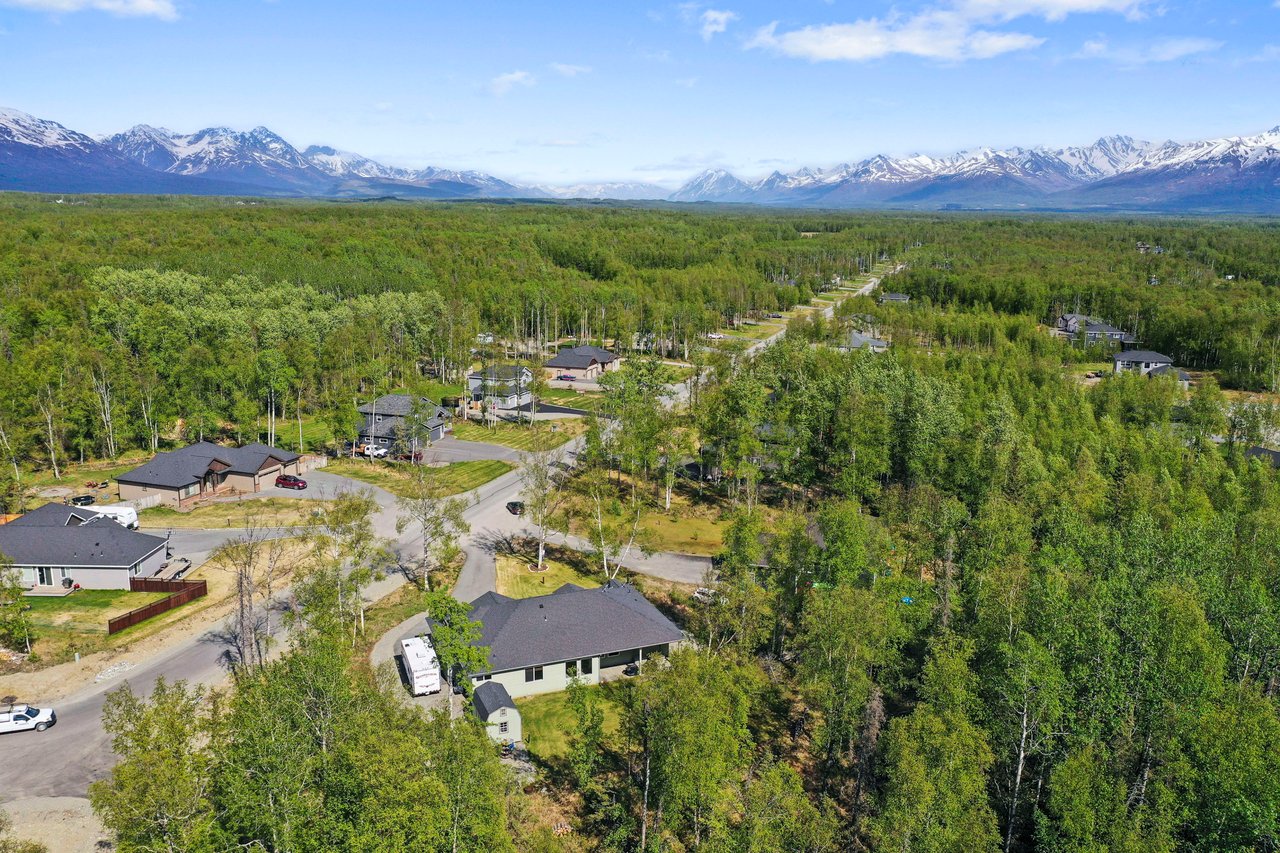
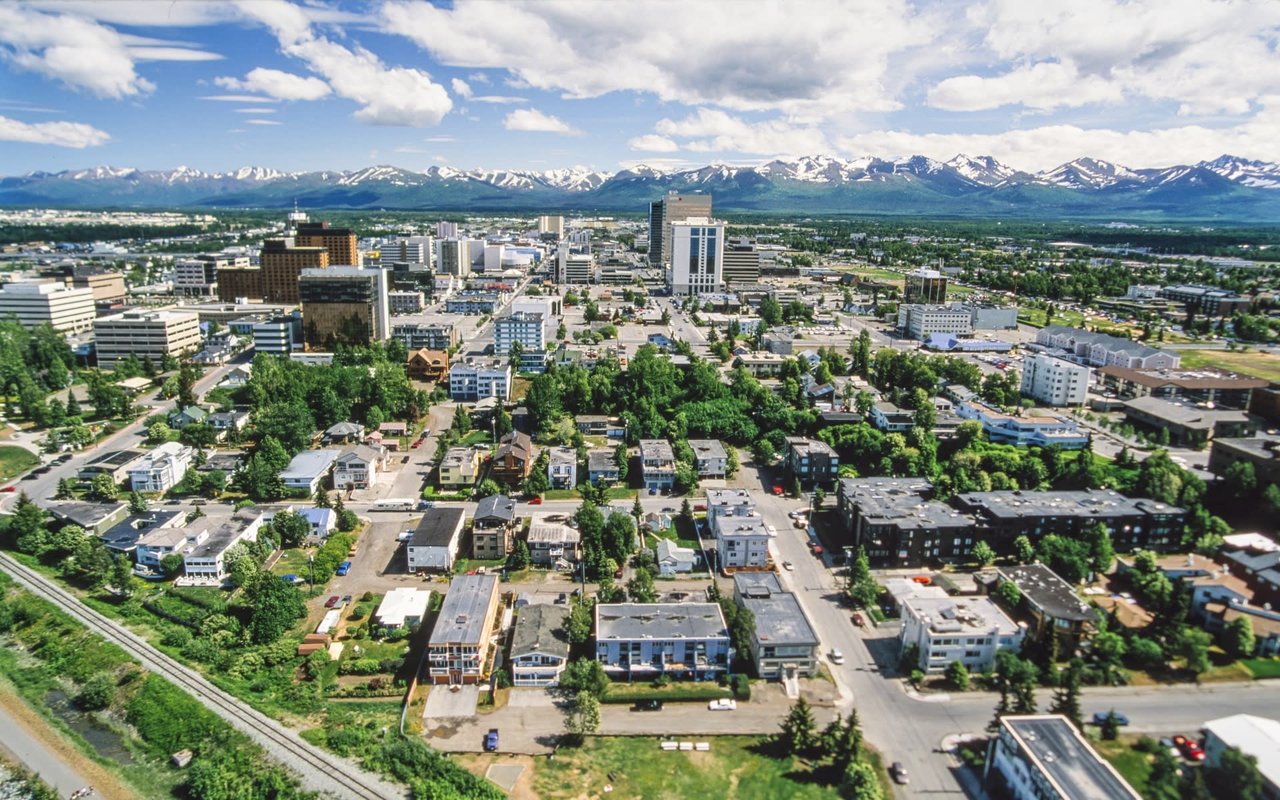
Anchorage's most walkable address — and one of its most quietly coveted.
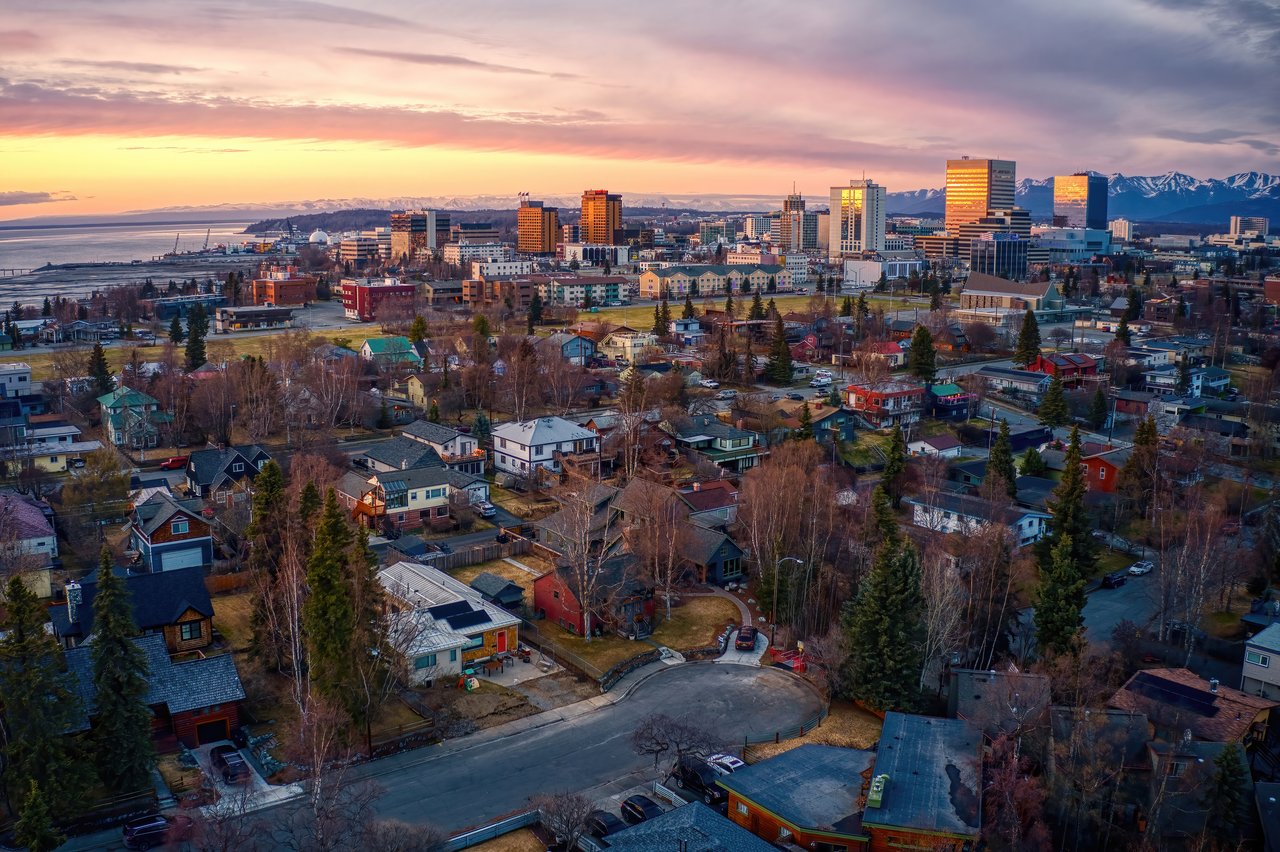
South Addition sits at the southern edge of downtown Anchorage, bounded by Westchester Lagoon to the south, the Coastal Trail bluffs to the west, L Street to the east, and Delaney Park Strip — Anchorage's first airstrip, now its central green — to the north. It is one of the city's oldest, most architecturally varied, and most enduringly desirable neighborhoods. View current South Addition homes for sale, or read on for the full neighborhood picture.
What makes South Addition distinctive is what cannot be replicated. You cannot manufacture more land between downtown and the inlet. Lots are tightly held by owners who tend to stay for decades. The mix of 1940s wartime cottages, mid-century ranches, renovated historics, and the bluff-front estates of Bootlegger's Cove gives the streets a character that newer Anchorage submarkets simply do not have — and a permanent supply ceiling that reinforces the neighborhood's pricing power.
Most of Anchorage requires a car. South Addition does not. From a typical home in the neighborhood, the Coastal Trail is a two- to five-minute walk, downtown's restaurant row is a ten-minute walk, and Westchester Lagoon — the city's most popular public space, with paddleboards in summer and ice skating in winter — is essentially in the backyard.
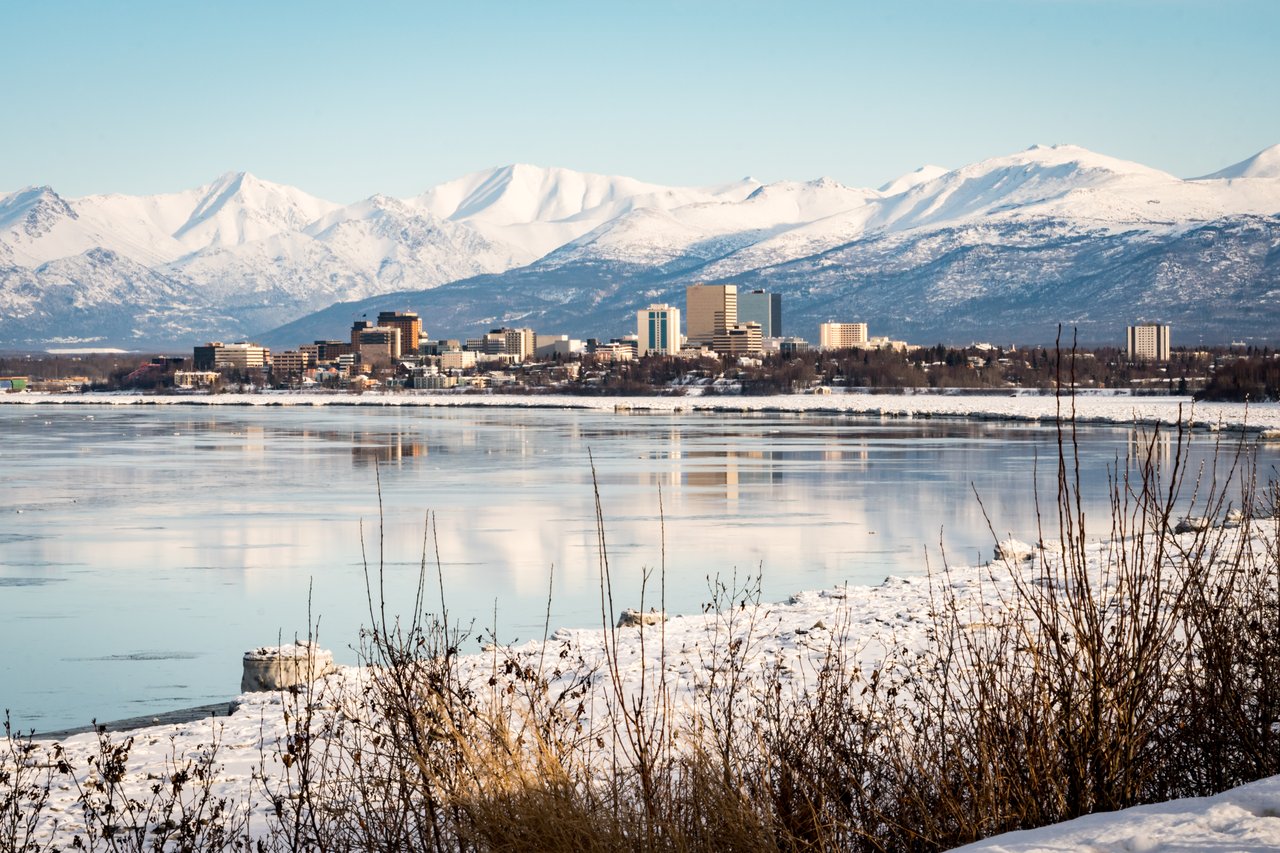
The lifestyle is genuinely urban for Alaska. Residents commute to downtown offices on foot. Coffee runs happen at neighborhood cafes, not drive-throughs. Summer evenings are spent on the Park Strip or at Westchester Lagoon, watching the alpenglow on the Chugach Mountains across Knik Arm. For buyers relocating from larger cities — Seattle, Portland, the Bay Area — South Addition is often the only Anchorage neighborhood that approximates the walkable, urban-village experience they are accustomed to.
South Addition's growth traces back to the 1940s, when Anchorage experienced its first major boom driven by World War II military expansion. The neighborhood was platted as a residential addition south of the original Anchorage townsite, designed to house the military families and civilian workers arriving to support Fort Richardson and Elmendorf Air Force Base. Many of the small cottages still standing on quieter blocks date to that period — modest by today's standards, but built with the materials and craftsmanship of an era that still shows.
The 1964 Good Friday Earthquake — at magnitude 9.2, the most powerful earthquake ever recorded in North America — reshaped the western edge of the neighborhood. Soil liquefaction at the Bootlegger's Cove bluff caused significant erosion and, in places, the loss of homes that had stood at the edge. The neighborhood rebuilt and adapted, and many of today's properties carry the quiet resilience of a community that has weathered Alaska's most defining natural event. Modern construction along the bluff is built to thoroughly studied geotechnical standards.
By the 1970s and 1980s, as Anchorage's oil economy expanded, South Addition transitioned from working-class wartime housing to a neighborhood increasingly prized for its proximity to downtown, its mature trees, and its established streets. Today, original homes are being carefully renovated and selective new construction is filling the few remaining lots — but the neighborhood's character remains continuous with its origins.
Bootlegger's Cove. The bluff-front western edge of South Addition, named for its Prohibition-era history — when bootleggers would smuggle alcohol from ships anchored offshore. Today, it is home to roughly 40 to 50 residential properties with direct bluff-edge positions, and turnover is minimal. Owners hold these homes for decades. From the bluff, residents look across Cook Inlet to the volcanic peaks of the Alaska Range; on clear days, Denali — North America's tallest peak at 20,310 feet — dominates the northern horizon, with Mount Susitna ("the Sleeping Lady") reclining to the northwest. Properties here regularly clear $1.1M and routinely reach $1.5M and beyond. When a Bootlegger's Cove home does come to market, it attracts serious buyers immediately.
The Park Strip area. The northern band of South Addition, lining Delaney Park Strip. Historic homes, tightly maintained, with one of the city's strongest neighborhood-association cultures. Walk to the Anchorage Museum, the Performing Arts Center, and downtown.
Inlet View / central South Addition. The neighborhood's residential core — quieter streets, a mix of historic craftsmans and renovated mid-century homes, anchored by Inlet View Elementary School. The most active price tier in any given quarter typically comes from this part of the neighborhood.
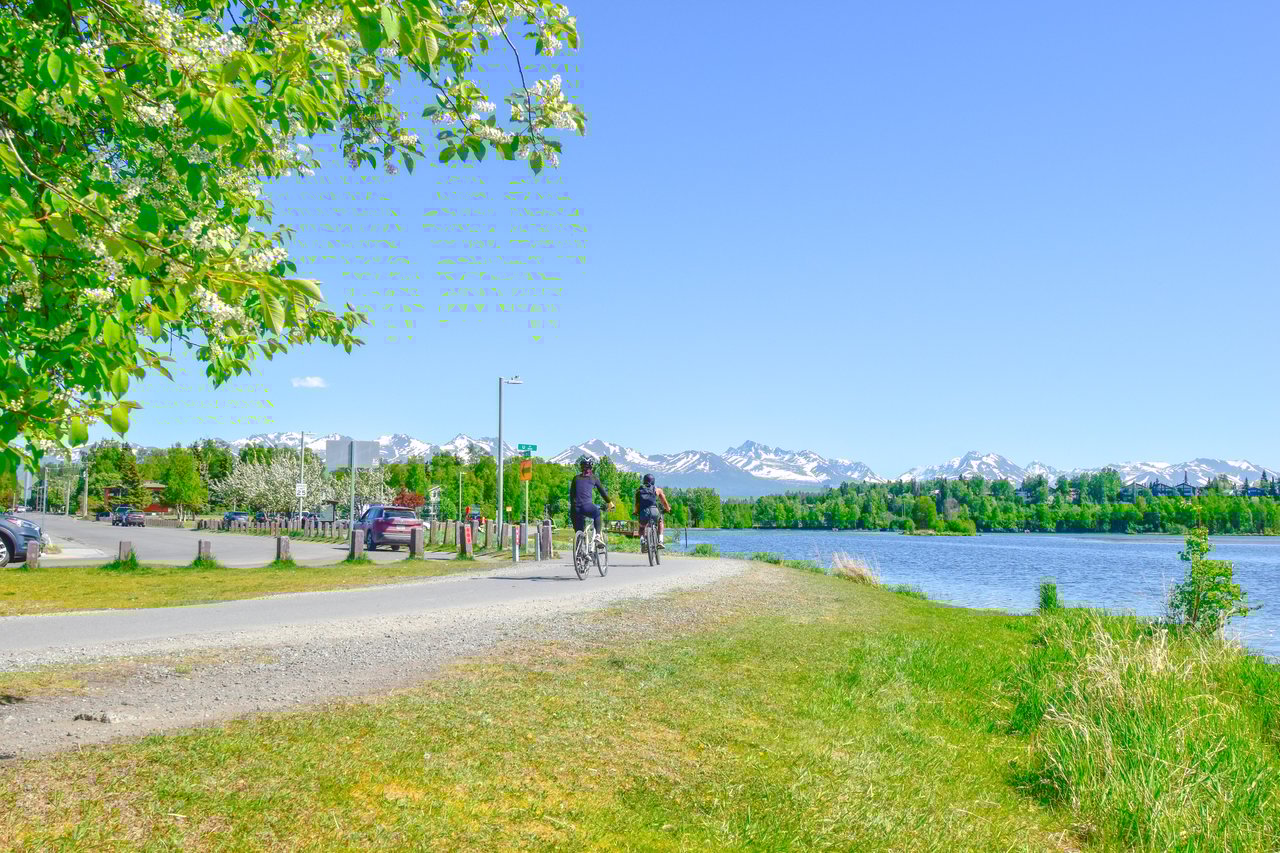
The Tony Knowles Coastal Trail — Anchorage's crown jewel, eleven paved miles from downtown to Kincaid Park — runs along South Addition's western edge. Residents on the bluff side reach it in a two-minute walk. The trail is used year-round: running and cycling in summer, cross-country skiing and fat-biking in winter.
Westchester Lagoon is the neighborhood's natural centerpiece — where Chester Creek empties into a tidal lagoon before flowing into Cook Inlet. The lagoon supports a different rhythm in every season:
The Chester Creek Trail runs east from the lagoon through the heart of Anchorage, connecting to Goose Lake, the University district, and eventually Far North Bicentennial Park — a virtually car-free commute route that becomes more valuable as the city continues investing in its trail infrastructure.
South Addition's dining and grocery options reflect the neighborhood's character: small, considered, and walkable. New Sagaya City Market serves as the de-facto neighborhood grocer, with one of Anchorage's strongest selections of imported foods and prepared meals. Chickadee Coffee is the morning standby. And Fire Island Rustic Bakery — a beloved neighborhood institution that locals will quietly tell you not to miss — bakes some of the best bread in the state. The K Street market and a constellation of downtown restaurants are all an easy walk north into Anchorage's central business district.
South Addition is served by the Anchorage School District. Inlet View Elementary School, located within the neighborhood, is consistently rated among Anchorage's strongest elementary schools. Middle-school students attend Central Middle School of Science (a magnet program with selective enrollment) or Romig Middle School. Most South Addition high school students attend West Anchorage High School, with Steller Secondary School (an alternative magnet program) a popular option for families who prioritize project-based learning.
For families, walkable elementary access is a structural advantage. In most Anchorage neighborhoods, elementary school requires a bus ride or car drop-off. Here, kids can walk or bike on quiet residential streets.
South Addition attracts a distinct mix of residents who value urban convenience and outdoor access in equal measure:
The common thread: these are residents who chose Anchorage intentionally, and chose South Addition because it offers a quality of daily life that is genuinely rare in Alaska's largest city. The neighborhood has a quiet confidence — it does not need to advertise itself, because the people who belong here already know.
South Addition operates as one of Anchorage's tightest, most consistently desirable real estate markets. Structural supply constraints — no available land for new construction and slow turnover among long-tenured owners — combine with persistent buyer demand to produce reliable price stability and appreciation.
Lot sizes are modest by Anchorage standards — typically 6,000 to 9,000 square feet — reflecting the neighborhood's urban, pre-subdivision-era platting. For buyers accustomed to half-acre lots in Eagle River or the Hillside, the trade-off is location: smaller lots in exchange for walkability, trail access, and a five-minute drive to downtown.
For current quarter-by-quarter market data — median sold prices, days on market, and sold-to-list ratios — see our most recent South Addition Q1 2026 Market Report, refreshed quarterly with MLS-direct data.
South Addition offers more housing diversity than most Anchorage neighborhoods. Here is what is available at each price tier.
Property Type | Typical Price Range | Typical Size |
|---|---|---|
Condominiums & townhomes | $325K – $475K | 700 – 1,200 sq ft |
Mid-century bungalows | $475K – $625K | 900 – 1,600 sq ft |
Renovated historic homes | $625K – $900K | 1,600 – 2,400 sq ft |
Newer infill construction | $750K – $1.1M | 1,800 – 3,000 sq ft |
Bootlegger's Cove premium | $1.1M – $1.5M+ | 2,500 – 4,000 sq ft |
Call Sean Williams directly: (907) 312-8141
What makes South Addition different from the rest of Anchorage?
South Addition is Anchorage's original walkable neighborhood — tree-lined streets laid out in the city's earliest plat, bordered by Delaney Park and downtown. It is one of the only places in Anchorage where daily life works on foot: downtown offices, the Park Strip, the Coastal Trail, and restaurants are all within blocks.
What kinds of homes are in South Addition?
The housing stock spans nearly a century — original cottages and wartime-era homes, mid-century houses, extensive renovations, and selective new construction on infill lots. No two blocks read the same, and character is the constant.
How competitive is the South Addition market?
Consistently one of Anchorage's tightest. Inventory is structurally limited — the neighborhood cannot expand — and well-presented homes draw immediate attention. Over the trailing twelve months, the median South Addition home sold in five days, and 80 percent of sales closed inside 30 days at above list price. Buyers should be pre-approved and ready to move; sellers benefit from that same scarcity.
Where do South Addition kids go to school?
South Addition is served by the Anchorage School District's downtown-area schools, with Inlet View Elementary the neighborhood anchor. Confirm current boundaries with ASD for a specific address, as assignments can shift.
Is South Addition a good investment?
Scarcity is the argument. A finite, walkable, park-adjacent neighborhood next to downtown does not get built twice in Anchorage. Homes here have historically held value through market cycles better than commodity inventory elsewhere in the Bowl.
How do I see current South Addition listings?
Active listings appear in the South Addition Homes for Sale section on this page, updated from the MLS. For early word on homes before they list, contact The Prince Group at (907) 312-8141 — in this neighborhood, timing is most of the game.
Whether you are watching the market or ready to move, The Prince Group knows this neighborhood house by house. Call (907) 312-8141.
Current South Addition listings, updated directly from the MLS — inventory here moves quickly, so check back often or ask about off-market opportunities.
South Addition sellers hold one of Anchorage's strongest positions: limited inventory, durable demand, and a buyer pool that already knows what the neighborhood is worth. The Prince Group prices to that reality. Request a valuation below or call (907) 312-8141.
Sellers preparing to list can also review the Certified Pre-Owned standard — a pre-listing inspection approach that settles repair questions before a buyer's inspector sets the agenda.
Get three independent automated valuations of your home in about two clicks. The Prince Group's instant valuation tool pulls from multiple data sources to return a real-time price corridor — useful whether you're planning ahead for a sale, considering a refinance, or simply curious about your current equity.
For a precise expert review, request a complimentary Strategic Pricing and Marketing Analysis through the same tool. Sean Williams will personally evaluate your home against current and recent comparable sales in your neighborhood and recommend a specific pricing and launch strategy.
Or call Sean directly at 907.312.8141.